

Software updates bring product enhancements, the latest components, features, bug fixes, and security patches to the QuickBooks Desktop. Therefore, it is important that you regularly update QuickBooks Desktop on your system. This will also help you ensure faster completion of business projects using new tools, utilities, and features.
In this article, we are primarily going to talk about three things:
- How to Update QuickBooks Desktop for Windows
- How to Update QuickBooks Desktop for Mac
- How to Update QuickBooks Desktop Enterprise Version
We will discuss the steps for the QB Desktop manual update for all three versions listed above. Furthermore, you will discover troubleshooting methods to use when you fail to install QB updates. All right then, let us dive into the blog and seamlessly update the QuickBooks application.
What is a QuickBooks Update?
Like any other software out there, QuickBooks also needs to be maintained and up to date as per the latest released features. A QuickBooks update includes fixes for common bugs and glitches that become everyday problems in outdated versions. It serves the purpose of improving the performance, enhancing security, and adding new features.
Why Must You Update QuickBooks Desktop Regularly?
With a new version of QuickBooks released each year, adding a new version of QB Desktop to your hosting account and upgrading the files to match that new version of the QB application. Moreover, the QB Desktop is crucial to closing security gaps, reducing vulnerabilities, and saving data from threats of malware and viruses. Additionally, updating the QBDT application will help you get the latest payroll tax table updates easily.
Things to Ensure Before Updating the QuickBooks Desktop
There are several points that can interfere with the update, like download accelerators, connection speed, and security settings. Therefore, you need to ensure a few things before running the QuickBooks updates.
- Downloading can prove to be the opposite of helpful. Therefore, disable the download accelerator before you download the updates
- Ensure that the minimum speed is 28.8 kilobits per second if you are on a dial-up connection
- Log in with your login name and verify that the Parental Control settings are not enabled if you are on American Online (AOL)
Other than that, if you are facing any issues related to the internet connectivity, you must reach out to the internet service provider for assistance.
Section A: Update QuickBooks Desktop for Windows
In this section, we will show you how you can download and install the latest update on your QuickBooks Desktop for Windows. First of all, let us see if you already have the most recent release installed on your computer.
Check Your Release Information
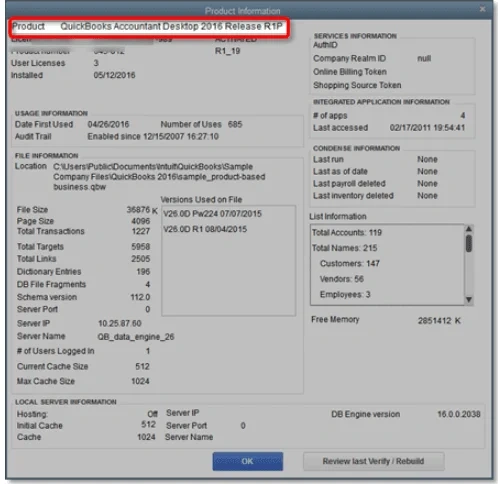
Here’s how you can find out the current version of QuickBooks Desktop installed on your computer:
- Open QuickBooks Desktop
- Now, tap F2 (or Ctrl+1 keys together) to launch the Product Information window
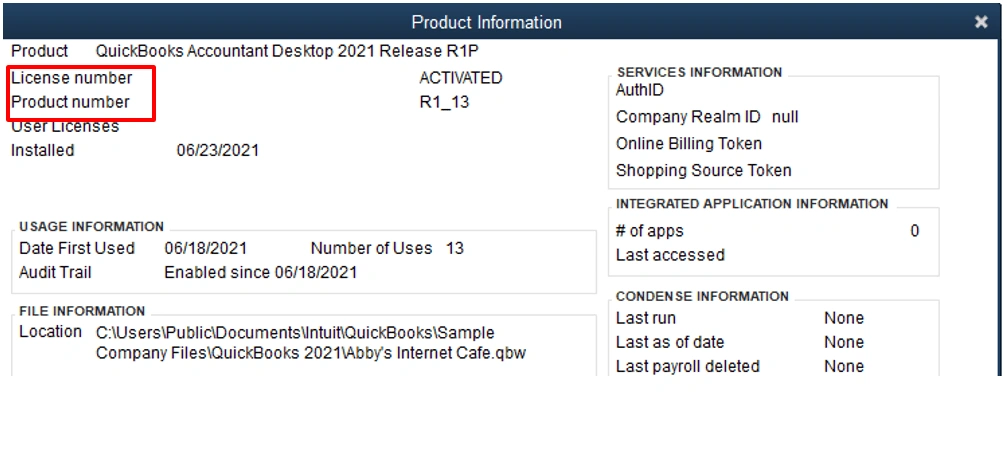
- Check what version and release you have currently
Here are the latest releases for your QuickBooks Desktop version.
- QuickBooks 2021 R17_21
- QuickBooks 2022 R14_47
- QuickBooks 2023 R11_35
- QuickBooks 2024 R6_60
Now, let’s discover how you can download and install new QB Desktop updates.
How to Install Automatically Downloaded Updates in QuickBooks Desktop
You should follow these points for the QB Desktop manual update:
Set Up QuickBooks for Automatic Updates
You can schedule the QB to automatically get updates. To do so, follow the steps below.
- Access the Help menu to head to Update QuickBooks Desktop
- Next, click on the Options tab and select Yes
- Lastly, tap on the Close button
These steps will make sure that QB will update the application as soon as they are available.
Run the Immediate Update and Install It
You can download the update and install it on the system right away as well.
- Start by opening the Help menu and heading to Update QuickBooks Desktop
- Next, click on the Update Now tab and then select Get Updates
- When QuickBooks is done downloading and updating, restart your QB software
- You will be prompted to install the update. Click on the Install Now option
If you use QuickBooks Payroll, download payroll updates before you send paychecks. However, you will need an active payroll subscription to do so.
Optional: Get Updates from the Internet
If you are not able to install the update directly from QuickBooks, you can do so from the Internet. Here’s how you need to do so:
- Open your web browser and access the Downloads & Updates page
- Go to the Select Country tab and choose your country
- Move to the Select Product tab and choose your QuickBooks product
- Jump to the Select Version tab and choose your QB version (year)
- Tap Search, and after that, click the Get the Latest Updates button to download the updates
- Once the download process is finished, open the file and start the installation of updates
- Follow all the steps and finish installing QuickBooks updates on your system
Are you failing to install QuickBooks updates? If that’s the case, try downloading the updates once more, as described below.
Can’t Install QuickBooks Update?
Sometimes, you might experience failure when installing QuickBooks Desktop updates. In such cases, here’s what you need to do:
1. Download the Update Again
Try downloading and installing the update a couple of times and check if it works.
- Open QB Desktop and choose Help
- Click on Update QuickBooks Desktop
- Choose Update Now and select Get Updates
Give the update a while to complete. Once it is finished, restart QuickBooks Desktop.
Now, press F2 and check the Product Information window. If the release number is the same as it was before, try the next method.
2. End All the QuickBooks Tasks Running in the Background
The background execution of various QB files can hinder the QB Desktop update process. You need to stop the execution of all QB files on your computer. Here’s what you should do:
- Close QuickBooks Desktop
- Press the Ctrl + Shift + Esc keys together to open Task Manager
- Go to the details tab and find these background processes. Select them and choose the End task for each of them
- QBW32.exe or QBW.exe
- QBCFMonitorService.exe
- Qbupdate.exe
- QBDBMgr.exe or QBDBMgrN.exe
- QBMapi32.exe
- Now, go to the Start menu and right-click on the QB Desktop icon
- Choose Run as administrator
Now, attempt to install the update again
Let’s now move to the following section to learn how to update QuickBooks for Mac using simple steps.
Section B: Update QuickBooks Desktop for Mac to the Latest Release
In this section, we will walk you through the steps of installing the most recent release of QuickBooks Desktop for Mac.
How to Check the Release Information
Let us first check the release information and know whether you have the latest release installed. Here’s how you need to do so:
- Open QuickBooks Desktop for Mac
- Now press Command+1 to launch the Product Information window
- Check what version and release you have right now
- Check whether you have the latest release for your QuickBooks Desktop version
- QuickBooks Mac 2021 R14_2
- QuickBooks Mac Plus 2022 R11_2
- QuickBooks Mac Plus 2023 R7.6
- QuickBooks Mac Plus 2024 R10.2
If you do not have the latest release installed, update your application.
How to Update QuickBooks Desktop for Mac Manually
To perform the QB Desktop manual update for Mac, you can follow the points described below:
- Open the QuickBooks menu
- Click on Check for QuickBooks Updates
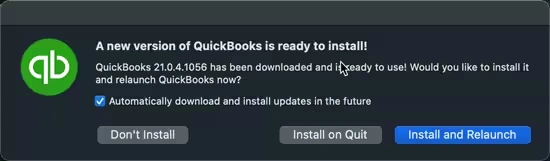
- Choose Install and Relaunch
Note: You can select the checkbox ‘Automatically download and install updates in the future’. This will automatically install the updates in the future.
Can’t Install the Update on QuickBooks Desktop for Mac?
Sometimes, the update fails due to an error, or the release number stays the same and doesn’t advance. Here is how to install the update successfully.
1. Download the QB Desktop Update Again
Attempt to download the update a couple of times and check if the release number advances. Here’s what you should do:
- Open the QuickBooks menu. Click on Check for QuickBooks Updates
- Choose Install and Relaunch
Now check the release number. If it stays the same, continue to the next solution.
2. Download from Intuit’s Website
Here is how you can download QuickBooks Update for Mac from Intuit’s official website.
- Open the Downloads & Updates page
- Click on the standard setup
- Tap the Country dropdown menu and choose your country
- Select the Product dropdown menu and choose your product
- Click on the Version dropdown menu and choose your version (year)
- Tap on Search, followed by Get the Latest Updates
Save the installation file in a folder. Once the download is finished, open the file and run the installation. Once the updates have been installed, reopen your computer.
Section C: Update QuickBooks Desktop Enterprise to the Latest Version
One thing you must consider when updating your QuickBooks Desktop Enterprise is the disruption to the work hours. We advise you to update it on a day off or a weekend.
However, make sure that your system meets the minimum system requirements for the QuickBooks Desktop Enterprise.
Now, let us go about updating QB Desktop Enterprise.
Step 1: Ensure that the Company File is Ready for the Update
Before we go ahead and update QuickBooks Enterprise, we need to check and make sure the company file has no data damage. Here’s how to do so:
- Open QuickBooks Desktop and log in as the Admin. Admin accounts usually have a password
- Open the Company menu and choose Users. Click on Edit the Admin user
- Check the company file name, and if there are special characters like “:”, “&”, and “/“, remove them. Now, ensure the extension is .qbw
- Now, exit and restart QuickBooks
- Click on the Window menu and choose Close All
- Open the File menu and choose Utilities
- Click on Verify Data
You will receive the message ‘QuickBooks detected no problems with your data file’ once the company file data is verified. However, if you see an error message, follow the instructions given to fix it.
Now, verify the company file data again.
- Click on the Window menu and choose Close All
- Open the File menu and choose Utilities
- Click on Verify Data
Once you make sure there are no errors or data damage, you can go ahead and install QuickBooks Desktop Enterprise as described below.
Step 2: Install the Newest QuickBooks Desktop Enterprise Version On the Server
First, download the latest version of QB Desktop Enterprise. Save the file somewhere you can easily open it from. Once done, follow these points:
- Now, close any running programs, which include antivirus and security software
- Open the QuickBooks Desktop Enterprise update file you downloaded
- Click on Server Install and choose Database Server and QuickBooks Application
- If you only have a server installed, you should install the update over the previous version. Alternatively, you can use the full program install
- If you have the full program, including the QuickBooks Database Manager, on the computer, you can go ahead and install the previous version. You are also free to keep both versions. Moreover, one Database Manager will suffice for more than one version installed
- Now, follow the onscreen prompts and complete the installation. However, if you see an error or the update fails, restart the system and install the update again
- Open QuickBooks Desktop and sign in to the company file
Note: When QuickBooks Desktop is updated to another version, the company file also needs to be updated before it can be opened in the newer version.
- Log in as an administrator. QuickBooks Desktop will create a backup for your company file before updating it. The company file will open once the update is finished
Optional: You Can Uninstall the Older Version
Once you’ve successfully installed your new version, you can uninstall old versions of QuickBooks from the server, including any database managers. Here is how you can do that:
- Open the Windows Start menu
- Go to Settings and choose Control Panel
- Click on Uninstall a program
- Find the old version of QuickBooks and choose Uninstall/Change. After that, follow the on-screen instructions to uninstall the program
Now, go to the next step to learn how to set up your network with QB Desktop Enterprise in a multi-user environment.
Step 3: Configure Network and Server Settings
We will guide you through setting up the network to use QuickBooks on multiple workstations. Here’s what you need to do:
- Press the Windows Start button
- Choose Programs
- Tap on QuickBooks and choose QuickBooks Database Manager
- Click on Scan Folders
- Now, add the folder where the company file is stored
- After that, scan the folder. You’ll be able to see the company file at the bottom of the window
- Exit the Database Server Manager
Now, let’s discover how to install QB Desktop Enterprise on different workstations, as described in the next step.
Step 4: Install the Newest QB Desktop Enterprise On Various Workstations
Before installing QuickBooks Enterprise on different workstations, you need to uninstall its previous versions. Here’s how you can do so:
Uninstall the Previous QB Enterprise Version
- Go to each workstation and click the Windows Start button
- Choose Settings, and after that, tap the Control Panel
- Select Uninstall a program and choose the previous QB Enterprise version
- At this point, click Uninstall/Change and follow all the steps to remove the older Enterprise version
Now, let’s quickly install the latest QB Desktop Enterprise version, as discussed below.
Install the Newest QB Enterprise Edition
- Open the workstation and download the newest QB Enterprise version
- Exit all the running programs and open the download file for QB Enterprise
- Choose Server Install, and after that, click the Database Server and QuickBooks Application option
- At this point, choose Express and select the ‘I’ll be using QuickBooks on this computer, but the company file will be located on a different computer’ option
- Execute all the prompts that show up on the screen
- Finish the installation and launch the company file using the latest version of QB Desktop Enterprise
- Access the file with admin rights and follow the process to update it
Finally, you will be able to utilize the latest QuickBooks Enterprise in a multi-user environment on your network.
A Quick Overview – Update QuickBooks Desktop Application
You can go through the table below to see a condensed version of the information on updating the QB Desktop software.
| Why should you update QuickBooks Desktop? | Keeping the QuickBooks Desktop up to date is essential to get the latest features that will smooth out your work operations. Also, it will improve the protection from malware and viruses. |
| How to update the QB Desktop for Windows? | You can set the QB software for automatic updates. Also, running an immediate update and installing it is an option. Other than that, you can also download the latest update from the official Intuit website. |
| How to Update the QB Desktop for Mac? | To update QuickBooks on the Mac system, there are two ways. You can get the QB update within the applicationAlso, you can download the update from the official website |
Conclusion
In this detailed article, we showed you how to effortlessly update QuickBooks Desktop for Windows, Mac, and Enterprise editions. Furthermore, we discussed troubleshooting methods you can use if you fail to perform the QB Desktop manual update on your system. Hopefully, you can now utilize an updated QuickBooks application for different projects.
If you unable to solve that problem let connect with our QuickBooks Helper at +1 (800) 780 3064
Frequently Asked Questions (FAQs)
Q How do I update my version of QuickBooks Desktop?
A To update the version of QuickBooks Desktop, you will need to buy a subscription of a recent version. This process is called upgrading QuickBooks Desktop.
Q How to update QuickBooks Desktop to 2024?
A To upgrade your QuickBooks Desktop to version 2024, you will need to buy the license for the same. Moreover, you will need to download and install QuickBooks Desktop 2024.
Q Why can’t I update QuickBooks Desktop?
A You might find yourself unable to update QuickBooks Desktop due to issues like unstable internet, firewall or antivirus blocking, etc. Other reasons could be a damaged program or incomplete installation of QuickBooks Desktop.
Q Where is the update button in QuickBooks Desktop?
A When updates become available, QB downloads them automatically, which you will see in the status bar as ‘update available’. Click on the update available option followed by install now. Alternatively, you can go to the Help menu and choose Update QuickBooks Desktop.

Gabby Taylor, combines financial expertise with literary prowess. With over a decade in finance, she crafts insightful narratives on navigating fiscal complexities
