

The process of migrating or reinstalling QBDT on a new computer may seem complicated, but it’s actually easy. When moving the QB to the new computer, ensure you have a stable internet connection, license info, product numbers, a USB drive, and a CD. There are two ways to transfer QuickBooks to new computer, including using the migration tool and performing the process manually. Both procedures are easy to perform if the steps are followed correctly. It is recommended to follow the procedures for transferring QB more conveniently.
Need professional assistance to reinstall QuickBooks Desktop on a new computer? Connect with our experts today by calling our Helpline Number +1 800 780 3064 for quick and reliable support.
Discussing the Crucial Requirements When You Transfer QuickBooks to New Computer
- It is recommended to keep the License and Product registration info handy before you move QuickBooks to a new computer.
- You must ensure that the computer on which you want to install QBDT has an internet connection. This is because you have to register the product after installation.
- Delete the QuickBooks Desktop application from the first computer.
- A USB storage device or an external hard disk (150-250 MB capacity) is required to transfer the company’s files from the old computer to the new one.
- You should back up your QuickBooks company file when you move QB to a new computer.
- You may also need a QBDT installation disk or the setup file on an external storage device.
Go through the points below and ensure you consider these requirements for a smooth transfer.
How to Move QuickBooks Desktop to a New Computer by Using the Migration Tool?
The migrator tool plays an important role in transferring QuickBooks Desktop to another computer. It also helps download the latest version of QBDT compatible with the new computer. Here, we will discuss how to migrate QuickBooks to new computer:
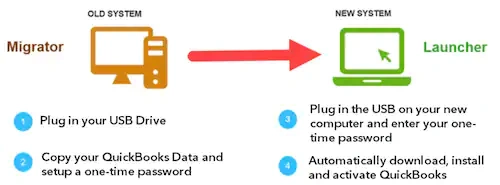
Prepare the Old Computer
- Initially, open QuickBooks on the old computer.
- Then navigate to the File menu, choose Utilities, and select Move QuickBooks to another computer.
- Next, you need to follow the instructions to create a one-time password and select the USB flash drive as the destination.
- The tool will copy the QB data and settings to the USB drive.
Prepare the New Computer
- First, you need to insert the USB flash drive into the new Windows 11 computer.
- Then, launch the migrator tool from the USB drive.
- Finally, type the one-time password you created earlier and perform the prompts to finish the migration process.
Once your setup is complete, you should know what was copied and what wasn’t using the migrator tool. We will discuss it below.
Which Items Are Copied Using the Migrator Tool?
Some items are copied when you transfer QuickBooks from an old computer to a new one using the migrator tool. Now, we will list those items below:
- Up to the last three company files you opened on the old system, which included sample files.
- QuickBooks Desktop details, including the version and other info required to install QBDT on the new system.
- QuickBooks letters and templates.
- Related files, custom templates & forms.
- Local attachments.
- Scheduled and memorized reports.
- Spell Checker (spell.ini and UserDictionary.tlx).
- Printer Setting (PrintEng.ini, wpr.ini, and QBPrint.qbp).
- Financial Statement Designer (FSD data).
- Financial Statement Designer (FSD clients).
- Business Planner (.bpw).
- Cash Flow Projector (.cfp).
- Loan Manager (.lmr).
- Advanced reports (for QuickBooks Enterprise).
- Statement writer (for QuickBooks Accountant).
These are the items that are copied when you transfer QuickBooks to new computer.
Which Things Aren’t Copied Using the Migrator Tool?
Some protocols and configurations are not copied automatically when you migrate QuickBooks to new computer. Now, we will mention the things that are not copied during the migration process:
- Any payroll & payment setup. You’ll need to sign in again on the new system as part of our effort to safeguard the data.
- Any multi-user setup configurations.
- Any company files you have not currently opened. You can transfer these files manually or restore them from Intuit Data Protect.
- Intuit Data Protect. You’ll have to uninstall this from the old computer and set it up on the new computer manually.
- Any manual backup files.
Check out the items mentioned above, as you should know what is not copied during the QB migration procedure.
Note: Resolve QuickBooks Error 40001 Fix Payroll & Direct Deposit Issues Fast with quick, reliable steps to restore seamless payroll processing.
Manual Procedure to Move QuickBooks Desktop to Another Computer
You can manually transfer QB from the old computer to the new computer. Follow the steps below to transfer QB from the old computer to the new one without using the Migrator Tool:
A. Back up the company files and QuickBooks license
- Begin by creating a backup of the company files and the QuickBooks product license to the external storage device.
- Then, you need to install the latest version of QB on the new computer.
- After installing QB, download and restore the backup file to the new computer.
- Now, uninstall the QuickBooks software.
B. Restore the backup of the company file on the new computer
- First, install QuickBooks on the new computer.
- Next, you need to insert the storage device.
- Then, open QuickBooks and go to the File menu.
- Select the Open and restore company option.
- After that, click Restore a backup copy, then click the next tab.
- Now, select the local backup option and navigate to the backup file created in the old system.
- Finally, choose the location in the new system to save the backup, then click the “Save ” tab option.
Now, we have discussed that there are two ways to transfer QuickBooks to new computer. The first solution is to migrate QB using the QuickBooks migration tool; the other is to transfer it manually. You must go through these procedures to perform them correctly.
What are the Results After Moving QuickBooks to a New Computer?
After performing the appropriate procedure to transfer QuickBooks to new computer, QuickBooks Desktop will be installed on your new computer. All your data will be copied to get QBDT up and running on your new system. None of the data is deleted from the old computer.
What are the New Steps That You Should Follow After Transferring QuickBooks?
You need to open QuickBooks Desktop on the new computer and review the data to ensure everything you want is transferred correctly. It is crucial to check the data because the tool doesn’t copy some info:
- First, sign in to your existing payroll, banking, and payment services (if any).
- Then, you need to sign in to Intuit Data and set up your backup schedule.
- Next, transfer any additional company files from the old computer to the new one.
- After that, back up the company data on the new computer.
- Lastly, uninstall QuickBooks Desktop from the old computer if it is no longer required.
After following the new steps, your migration of QBDT to the new computer will be completed with the data you want.
What are the Healthy practices That You Should Follow During the QuickBooks Migration Process?
You must follow the expert tips for the QuickBooks migration process. Perform the practices mentioned below:
- You should ensure that the QB is updated to the latest version on the old computer.
- It is recommended to create a local backup and store it securely before starting the migration procedure.
- You should keep the license and product numbers handy for reinstallation and activation.
- Ensure to insert the USB, open it, and launch the Move_QuickBooks.bat file on the new system.
- It is advised to open the company file and review the reports to ensure all data has been correctly migrated.
By following the healthy practices, you can transfer QuickBooks to new computer more easily.
Quick View Table – Transfer QuickBooks to New Computer
Let’s quickly see the crucial points that we have covered in this blog.
| Requirements for the Pre-Transfer | The requirements during the pre-transfer include creating a company file backup, a strong internet connection, and keeping a USB drive (150-250 MB) or installation files ready. |
| Transfer Process | You can transfer QuickBooks to new computer by using the migration tool to copy data via USB. You can also do it manually. |
| Post-Transfer Setup | After moving the QB to the new computer, you must open and verify company data, sign in to payroll or banking services, reconfigure backups, migrate the missing files, and uninstall QB from the old system. |
Conclusion
In this blog, we discussed the process of transferring QuickBooks to a new computer, both by using the migration tool and manually. We also covered the pre- and post-transfer requirements. We also recommended healthy practices to make the procedure easier.
Frequently Asked Questions
No, the migration tool is not compatible with all versions of QuickBooks. This tool works well with QuickBooks Desktop Pro, Premier, and Enterprise versions. It is only available for properly licensed and updated 2028 and newer versions of QBDT. Remember that the migration tool doesn’t work with QuickBooks Online because it’s cloud-based.
Yes, you can install QuickBooks on two computers. However, files are only available to a single user, a maximum of two computers, but one at a time.
The best way to migrate QuickBooks without losing data is to back up the company file, install the same QB version on the new system, restore the backup, and then re-register the product. This solution maintains transactions, reports, and audit trails.

Jason Grace is a trained QuickBooks professional with over 10 years of experience in the accounting sector. He is dedicated to helping businesses reduce the stress of managing finances and supports entrepreneurs and small business owners in optimizing their QuickBooks experience.
