

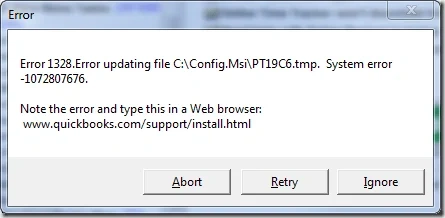
QuickBooks error 1328 may occur during installation, removal, update, or repair of QuickBooks Desktop. While attempting to repair the software, you might encounter an alert on your screen stating:
“Error updating file C:\Config.Msi\PT62C7.tmp”
or
“Error updating file C:\Config.Msi\PTXXX.tmp.”
This issue indicates damage or fault within the QuickBooks installation directory. Problems with Windows settings, incorrect QuickBooks installation, or installation issues are common causes of this error. It is essential to resolve this to continue your business operations. Therefore, we have created this troubleshooting guide that will walk you through the common causes of the issue and effective solutions to resolve it. Go through the entire blog to understand the root causes and restore normal QuickBooks functionality.
You may face technical troubles while resolving the error 1328. To tackle that, call +1(800) 780-3064 now and get instant help from a certified QuickBooks professional.
Common Causes of How QuickBooks Error Code 1328 Occurs
Before jumping into the solutions, understanding the root causes of QuickBooks error 1328 is essential. Let’s take a look at the most common reasons that can cause this issue in the pointers below:
- Corruption within the QB Installation folder
- Old temporary files in the config.msi folder
- Unsupportive QB update to the Windows OS version
- Network and connectivity issues
- Hardware problems
- Invalid entries in the Windows OS
- Malware or viruses in the system
Now that you’re aware of the possible causes behind error 1328, let’s move to the next section to discuss the troubleshooting methods to fix it.
5 DIY Methods to Get Rid of QuickBooks Error 1328
Next, let’s move ahead with step-by-step troubleshooting methods to fix QuickBooks error 1328 and restore smooth performance without further interruptions.
Method 1: Run the QB Install Diagnostic Tool from QB Tool Hub
A corrupted file in QuickBooks’ root installation folder is typically the cause of installation problems. The system issue can be identified and quickly resolved using the QuickBooks Install Diagnostic Tool. Nonetheless, the QuickBooks Tool Hub must be installed on the user’s computer. If not, download and install it from the Intuit website before attempting the instructions. Once done, follow the instructions below to run the Install Diagnostic Tool:
- Start by closing the QB application and opening the QuickBooks Tool Hub
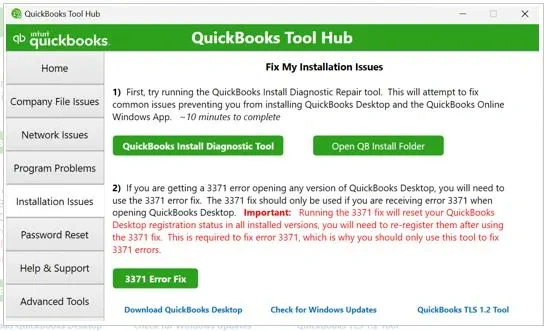
- Move to the Installation Issues tab, then tap on QuickBooks Install Diagnostic Tool
- It may take up to 20 minutes for the tool to finish the scan and resolve the issue. Don’t shut it off before fixing the installation problems
- Finally, restart your system
Now, check if the issue is gone or not. Still seeing the same error message? Try the next method.
Method 2: Rename the Config.msi File
Temporary files in the Config.msi file may interfere with a number of QuickBooks operations. Follow the instructions below to locate it and rename it:
- Start by navigating the C: Drive to find the config.msi file
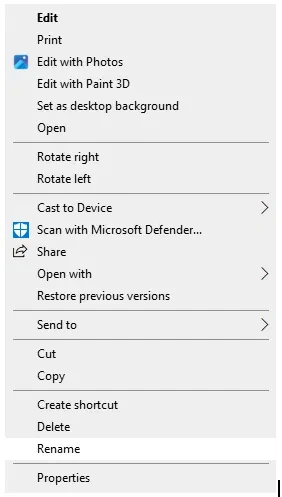
- Next, tap twice on the file to open the drop-down list
- Now, choose the Rename option
- Press Enter to make changes
When you are finished, hide the protected files and check whether QB repair issue 1328 has been resolved. Proceed to the next solution if not.
Method 3: Update the Windows OS to Its Latest Version
The most recent version of QuickBooks might not be compatible with previous versions of Windows OS, which could cause installation issues, including QuickBooks error 1328. Verify whether any new updates are available, then follow the instructions to do so:
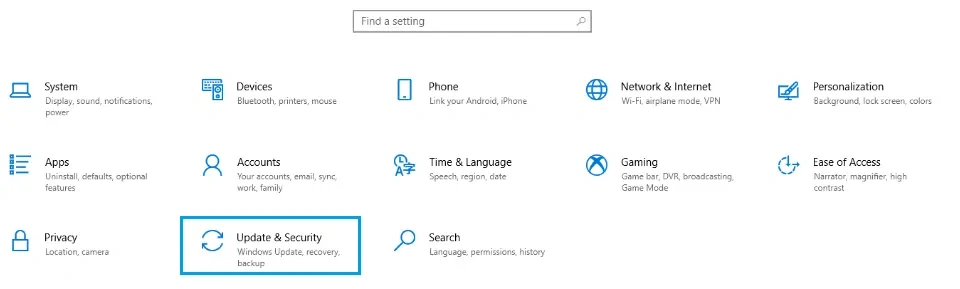
Windows 10:
- Initiate by tapping the Start button and choosing Settings
- Head to the Update & Security tab and choose the Windows Update button
- Tap on the Check for Windows Updates button and download all the available updates
Windows 11:
- Start by opening the Windows Start button, then head to Settings
- Next, select Update & Security and then select Windows Update
- Lastly, press the Check for Windows Updates button below and install the updates
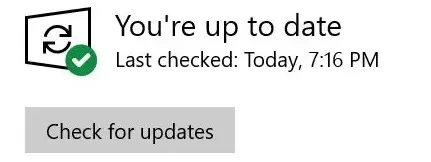
After that, check again whether the problem is fixed. If this issue still persists, follow the next blog.
Method 4: Reinstall the QuickBooks Desktop on Your System
To fix problems with company files, QuickBooks Desktop renames the QB folders when you reinstall it. Reinstalling QuickBooks has no impact on your data, which is another important fact. There are a few things you should be aware of before continuing with the troubleshooting steps.
- Think about downloading the installation appropriate for your QuickBooks version.
- Have your license number ready. The license number is visible on the original packaging if you bought it offline. In contrast, it will be visible in the purchase confirmation email if you have made an online purchase.
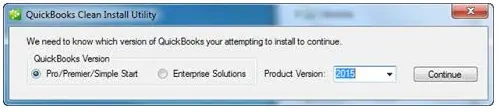
Important: You can also get the information from the account management portal.
Step 1: Remove QuickBooks Application from Your Computer
- Open the Windows Start menu, browse for Control Panel, and launch it
- In Control Panel, tap on Programs and Features or select Uninstall a Program
- From the on-screen list, find and choose the QuickBooks Desktop version you wish to remove
- Tap Uninstall/change, choose Remove, and follow the on-screen instructions to complete the process
If you cannot see this option, log out of Windows and then log back in as an administrator.
Step 2: Reinstall QuickBooks Desktop on Your System
Downloading the QuickBooks.exe file and running it to install the QB application are the two stages of installing QB Desktop.
Download the QuickBooks.exe File
- Open the QuickBooks Desktop window and select the appropriate option for the question “Will you be using QuickBooks Desktop on multiple computers at the same time (multi-user mode)?”
- Click Next. The Express setup window will appear on your screen
- Finally, tap the Download button to download the QuickBooks.exe file
Open the QuickBooks.exe File to Install QuickBooks
- Open the downloaded QuickBooks.exe file and process it by following the on-screen instructions
- Now, accept the software license agreement and tap Next to continue
- Finally, enter the product number and license number, then tap Next to move forward
Note: Installing the program requires an active internet connection. Additionally, there are two ways to install QuickBooks: custom and network or express. We advise going with express install.
- Choose Express and then hit Next
- Finally, choose Install and then choose Open QuickBooks
Note: New folders are automatically installed, and old ones are renamed by QuickBooks.
Try uninstalling QuickBooks and then manually changing the installation folders. If this doesn’t resolve the QuickBooks error 1328, follow the next solution.
Method 5: Uninstall QuickBooks and then Rename Installation Folders
This technique helps by eliminating any remaining QuickBooks files that might be preventing a clean installation. To do so, carefully perform the instructions below to remove QuickBooks
Installation file.
- Remove QuickBooks Desktop once again from your system, and make sure hidden files are visible by following the required steps
- Now, click on the Windows Start menu, enter “File Explorer” in the search field, and launch File Explorer
- Locate and open the folder that stores QuickBooks company files. This folder is typically named QuickBooks and can be found in one of the following paths:
- C:\ProgramData\Intuit\QuickBooks (year)
- C:\Users\(current user)\AppData\Local\Intuit\QuickBooks (year)
- C:\Program Files\Intuit\QuickBooks (year)
- For 64-bit systems: C:\Program Files (x86)\Intuit\QuickBooks (year)
- Once you find the folder, right-click on it and select Rename
- Append “old” to the end of the folder name so QuickBooks doesn’t reuse it during reinstallation
- Finally, reinstall QuickBooks Desktop
After implementing the methods above, check again whether the issue is gone. We hope this section will resolve this issue and that you can continue without further interruptions.
QuickBooks Error Code 1328: A Quick Overview
Here’s a quick overview table that highlights the key details of QuickBooks Desktop error 1328, including causes and solutions at a glance.
Error description | Error 1328 in QuickBooks arises when the software fails to update or install QB files. |
| Common causes | Corrupted installation files, permission-related issues, antivirus interference, outdated Windows components, or program problems. |
Proven fixes | Restart your system, run as administrator, update Microsoft OS update, reinstall QB software, or clean install QB Desktop. |
Conclusion
This was all you need to know about the QuickBooks error 1328. It has provided you with the main causes behind this issue, so you can prevent it in the future. Moreover, you can implement the troubleshooting methods outlined in this post to resolve this issue. However, if you are encountering technical issues when trying to resolve error 1328. You should seek professional help by dialing +1(800) 780-3064 and speaking with a certified QB expert who will be happy to assist you.
Frequently Asked Questions (FAQs)
A. The error code 1328 in QuickBooks Desktop commonly arises when installing or updating the QB application. The reasons include corrupted installation files, insufficient permissions, or conflicts with Windows components that prevent successful installation or updates.
A. To resolve QuickBooks error 1328, you can try the following troubleshooting fixes:
a. Run QuickBooks as an administrator
b. Use QuickBooks Install Diagnostic Tool
c. Rename the config.msi file as old
d. Reinstall the QuickBooks software on your computer
e. If nothing works, clean install QB Desktop
A. Error 1328 is a common installation or update error that is caused in case of corrupted files. To fix it:
1. Reboot your computer and reinstall the update.
2. Install QuickBooks Diagnostic Tool.
3. QuickBooks Repair QuickBooks through Control Panel.
4. Delete temporary files (%temp%)
5. Ensure Windows is updated
A. Error 1324 – it is caused by uninstalling QuickBooks because of invalid or corrupted folder paths (there are usually user profile or registry problems). It does not allow proper uninstallation of the software and is commonly associated with wrong systems file reference.
A. In order to repair a corrupted QuickBooks company file:
a. Verify and Rebuild Data utility
b. Using Verify and Rebuild.
c. Recovery of a recent backup (.QBB file)
d. Run QuickBooks File Doctor
e. Move the file to a local drive
f. Upgrade QuickBooks to the new version.

Gabby Taylor, combines financial expertise with literary prowess. With over a decade in finance, she crafts insightful narratives on navigating fiscal complexities
